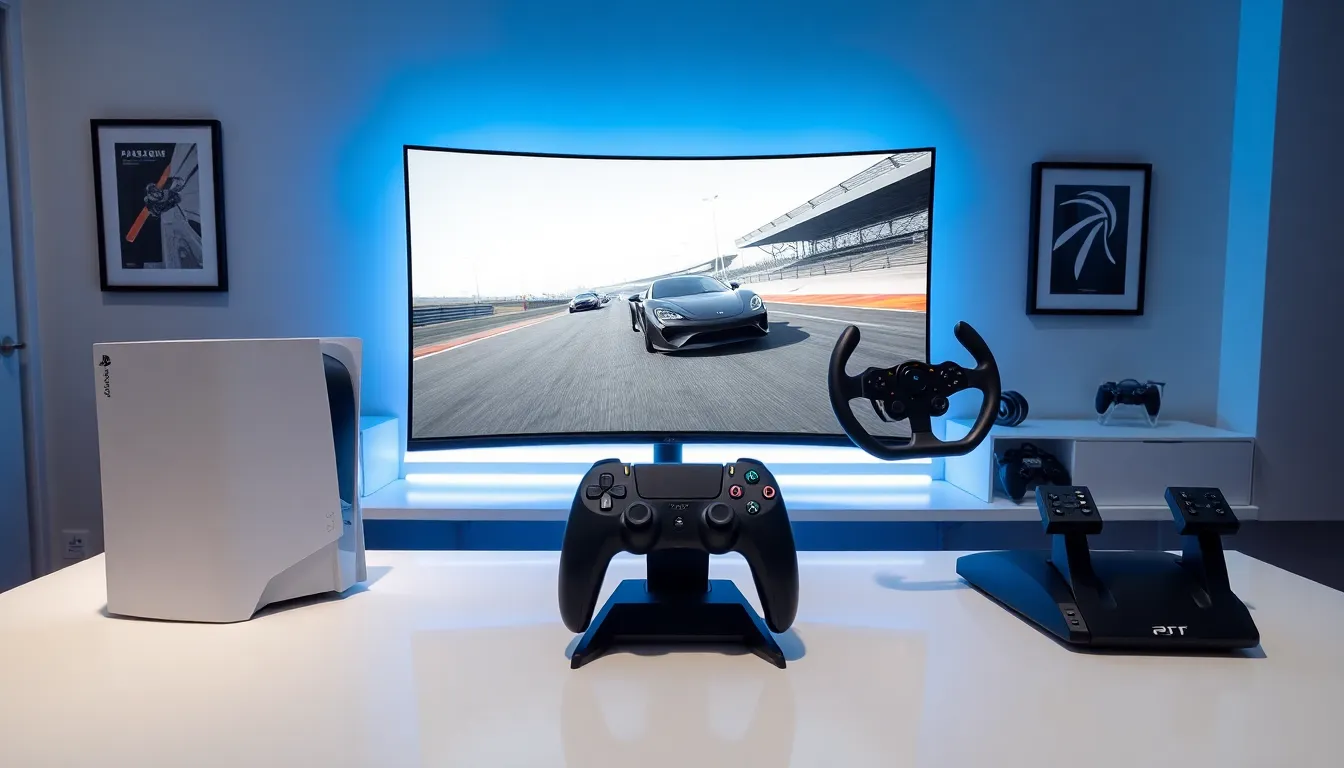

Racing games for beginners offer an exciting entry point into gaming. These titles combine fast-paced action with accessible controls that anyone can learn. New players often feel overwhelmed by the sheer number of racing games available today. This guide breaks down everything a beginner needs to know. From choosing the right genre to adjusting settings for success, players will find practical advice here. Racing games reward practice and patience, making them ideal for those just starting their gaming journey.
Table of Contents
ToggleKey Takeaways
- Racing games for beginners offer simple goals and short sessions, making them ideal for new gamers with busy schedules.
- Arcade and kart racers like Mario Kart 8 Deluxe provide the most forgiving experience with accessible controls and item-based gameplay.
- Learning the racing line and braking before corners are essential skills that dramatically improve lap times.
- Enable driving assists like traction control, ABS, and automatic transmission to ease the learning curve.
- Practice one track repeatedly instead of jumping between circuits to build transferable racing skills faster.
- Use rewind features and replay analysis to learn from mistakes without frustration.
Why Racing Games Are Perfect for New Gamers
Racing games for beginners work well because the core concept is simple: reach the finish line first. Unlike complex RPGs or strategy games, racing titles don’t require hours of tutorial content. Players understand the goal immediately.
The learning curve in racing games feels natural. A player starts slow, learns the tracks, and gradually improves lap times. This progression creates a satisfying feedback loop. Small victories, like shaving two seconds off a personal best, keep motivation high.
Racing games also offer flexibility in commitment. A single race takes just a few minutes. Players can enjoy quick sessions without dedicating entire evenings. This makes racing games for beginners especially appealing to those with busy schedules.
Another advantage is the visual clarity. Players always know where they stand in a race. The position indicator shows progress instantly. There’s no confusion about objectives or next steps. This transparency helps new gamers build confidence quickly.
Multiplayer options add social appeal too. Friends can compete locally or online without extensive preparation. Everyone understands racing, whether they’ve played video games before or not. This shared knowledge base makes racing games excellent party entertainment.
Best Racing Game Genres for Beginners
Racing games for beginners come in several distinct genres. Each offers different experiences and skill requirements.
Arcade Racers
Arcade racers prioritize fun over realism. Games like Mario Kart 8 Deluxe and Forza Horizon 5 fall into this category. These titles feature forgiving physics, power-ups, and accessible controls. Crashes don’t result in severe penalties. Players can recover from mistakes quickly. Arcade racers represent the best starting point for most beginners.
Kart Racers
Kart racers deserve special mention. Mario Kart, Crash Team Racing, and similar games use items to level the playing field. A last-place racer can still win with strategic item use. This randomness keeps races exciting and reduces the skill gap between experienced and new players.
Open-World Racers
Open-world racing games let players explore at their own pace. Forza Horizon 5 and The Crew Motorfest offer massive maps with various event types. Beginners can practice driving without competitive pressure. These games suit players who want freedom alongside structured races.
Simulation Racers
Simulation racers like Gran Turismo 7 and Forza Motorsport aim for realism. These games require more patience and practice. But, they include assist options that help racing games for beginners feel manageable. Players interested in real motorsport should consider starting here with all assists enabled.
Essential Tips for Improving Your Skills
Racing games for beginners become more enjoyable as skills develop. These practical tips accelerate improvement.
Learn the Racing Line
The racing line is the fastest path through a track. It typically follows an outside-inside-outside pattern through corners. Most racing games display a suggested line on the track surface. Follow this guide until the path becomes instinctive. Understanding racing lines transforms lap times dramatically.
Brake Before Corners
New players often brake too late or not at all. Slowing down before a corner allows for faster exit speeds. The phrase “slow in, fast out” captures this principle perfectly. Players who master braking points will overtake those who don’t.
Practice One Track Repeatedly
Resist the urge to jump between tracks constantly. Pick one circuit and learn it thoroughly. Study every corner, elevation change, and braking zone. Deep knowledge of a single track builds transferable skills. Racing games for beginners reward focused practice.
Watch Replays
Most racing games include replay features. Watch races from different camera angles. Identify where time was lost. Compare lines with faster opponents. This analysis reveals improvement opportunities that real-time racing obscures.
Stay Smooth
Aggressive steering and braking cause slowdowns. Smooth inputs maintain momentum and tire grip. Gentle corrections beat dramatic saves. Racing games for beginners often feel counterintuitive here, less effort frequently produces better results.
Recommended Controller and Difficulty Settings
Racing games for beginners include various settings that affect difficulty. Adjusting these options creates a better learning experience.
Controller Choice
Standard controllers work perfectly for beginners. Racing wheels offer more immersion but require significant investment and space. Start with whatever controller came with the console or PC. Upgrade to a wheel only after confirming a long-term interest in racing games.
Driving Assists
Most racing games offer multiple assist options:
- Traction Control: Prevents wheel spin during acceleration. Keep this on initially.
- Stability Control: Reduces oversteer and understeer. Essential for beginners.
- Anti-Lock Brakes (ABS): Prevents wheel lockup during braking. Leave this enabled.
- Steering Assist: Helps guide the car through corners. Useful for complete beginners but should be disabled as skills improve.
- Automatic Transmission: Removes gear-shifting responsibility. Racing games for beginners benefit greatly from this setting.
AI Difficulty
Start with easy or medium AI opponents. Races should feel competitive but winnable. If winning becomes effortless, increase the difficulty. If finishing mid-pack feels impossible, lower it. The goal is consistent challenge without frustration.
Rewind Features
Many modern racing games include rewind functions. These let players undo mistakes instantly. Use this feature liberally during the learning phase. It removes the penalty for experimentation and encourages risk-taking.