
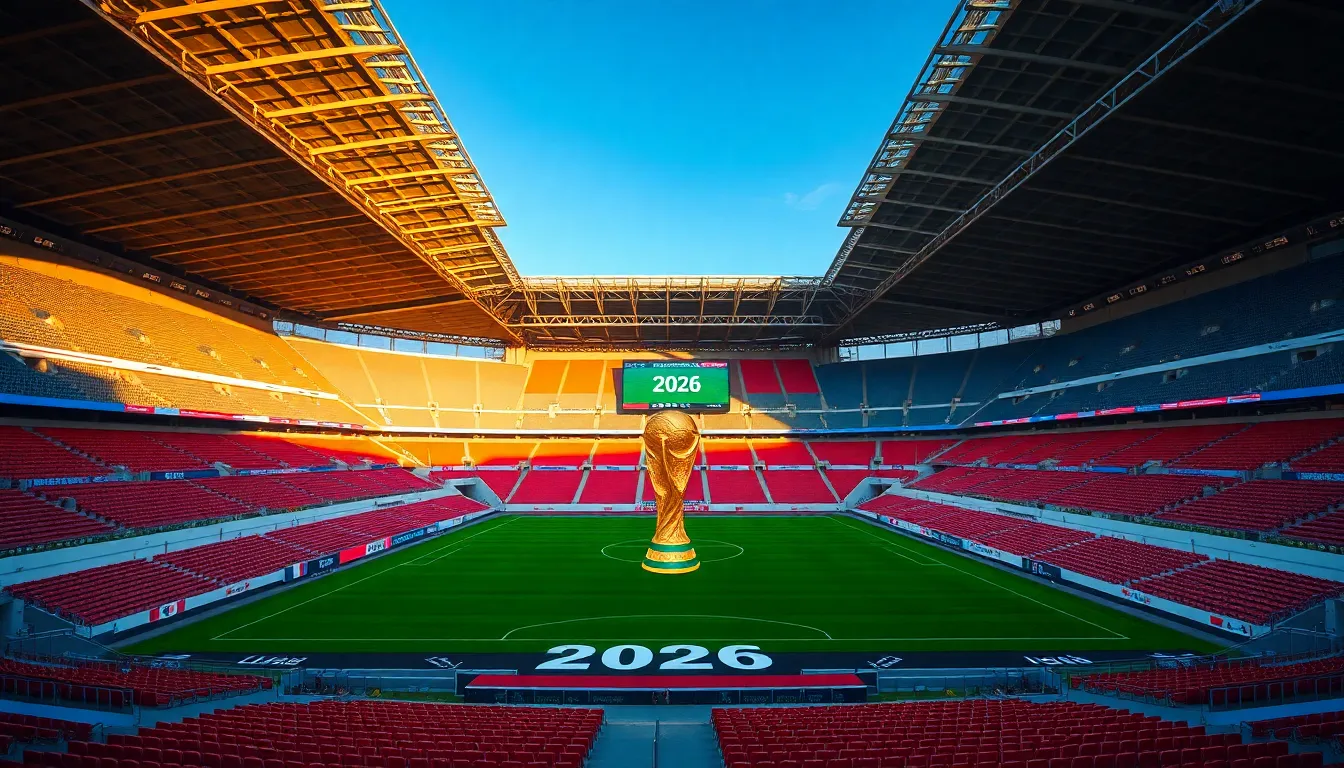
FIFA trends 2026 point to the biggest World Cup in history. The tournament will feature 48 teams across three host countries for the first time. Fans, players, and coaches are preparing for major changes in format, technology, and competition.
The 2026 World Cup marks a turning point for international soccer. New nations will compete on the world stage. Traditional powerhouses will face fresh challenges from emerging teams. FIFA trends 2026 also include significant upgrades to how fans experience matches both in stadiums and at home.
This article breaks down the key FIFA trends 2026 that will shape the upcoming tournament. From the expanded format to tactical shifts and technological innovations, here’s what to expect when the world’s biggest sporting event kicks off.
Table of Contents
ToggleKey Takeaways
- FIFA trends 2026 center on the largest World Cup ever, featuring 48 teams across the United States, Mexico, and Canada.
- The expanded format gives more nations from Africa, Asia, and CONCACAF a chance to compete on the world stage.
- Emerging teams like Canada, Japan, Morocco, and the United States are positioned to make deep tournament runs in 2026.
- Tactical shifts favor high pressing, counter-attacking strategies, and versatile players who can adapt to multiple positions.
- Semi-automated offside technology and improved VAR will deliver faster, more accurate officiating decisions.
- Stadium innovations and expanded streaming options will enhance the fan experience both in-person and at home.
Expanded Tournament Format and New Host Nations
The 2026 World Cup will expand from 32 to 48 teams. This change represents the largest format shift in FIFA World Cup history. Teams will be divided into 12 groups of four, with the top two from each group advancing to a 32-team knockout round.
Three countries will share hosting duties: the United States, Mexico, and Canada. The U.S. will host 60 of the 80 matches, including all knockout rounds from the quarterfinals onward. Mexico and Canada will each host 10 group-stage matches.
This tri-nation format creates logistical opportunities and challenges. Stadiums across North America offer modern infrastructure and massive seating capacity. MetLife Stadium in New Jersey will host the final with over 82,000 fans. AT&T Stadium in Texas and SoFi Stadium in California are among the premier venues.
The expanded format gives more nations a chance to qualify. Africa, Asia, and CONCACAF all received additional World Cup berths. European and South American teams will also see slight increases in representation.
FIFA trends 2026 show this expansion aims to grow the sport’s global footprint. More countries competing means more fans engaged worldwide. The tournament will run from June 11 to July 19, spanning 39 days of action.
Emerging Teams to Watch in 2026
The expanded format opens doors for teams that rarely reach the World Cup. Several emerging nations show strong potential for 2026.
Canada enters as a co-host with renewed momentum. The Canadian men’s team qualified for Qatar 2022 after a 36-year absence. Young talents like Alphonso Davies provide speed and creativity. Canada will look to advance past the group stage on home soil.
Japan continues its rise in Asian football. The Blue Samurai impressed in Qatar with victories over Germany and Spain. Their pressing style and technical players make them a threat against any opponent.
Morocco’s 2022 semifinal run was no fluke. The Atlas Lions combined defensive discipline with counter-attacking efficiency. Players competing in top European leagues give Morocco the quality to repeat their success.
The United States faces pressure as the primary host nation. A young core featuring Christian Pulisic, Weston McKennie, and Giovanni Reyna should hit their prime by 2026. Expectations at home will be immense.
Nigeria and Cameroon represent African nations with deep talent pools. Both could benefit from the continent’s increased allocation of World Cup spots. FIFA trends 2026 suggest African teams are ready to make deeper tournament runs.
Tactical and Playing Style Shifts
FIFA trends 2026 indicate tactical evolution across international football. Several playing style changes are emerging ahead of the tournament.
High pressing remains popular, but recovery time matters more in expanded tournaments. Teams playing seven matches to reach the final will need squad depth and rotation strategies. Coaches must balance intensity with player fitness.
Possession-based systems face continued challenges. Counter-pressing teams like Morocco and Japan proved effective against traditional giants. Quick transitions from defense to attack create high-percentage scoring chances.
Set pieces have grown in importance. Teams dedicate more training time to corners, free kicks, and throw-ins. England’s success with rehearsed set-piece routines in recent tournaments influenced other national teams.
Defensive shapes continue shifting toward back-three systems. This formation provides numerical advantages in central areas and allows wing-backs to join attacks. Italy, Croatia, and the Netherlands have used this approach effectively.
Player versatility has become essential. Modern internationals need comfort in multiple positions. Fullbacks must attack. Midfielders must defend. Forwards must press. FIFA trends 2026 favor multi-functional players who can adapt within matches.
Technology and Fan Experience Innovations
Technology will play a major role in FIFA trends 2026. Several innovations are planned for the tournament.
Semi-automated offside technology debuted in Qatar 2022. This system uses limb-tracking cameras and AI to make faster, more accurate calls. FIFA will refine this technology further for 2026.
VAR (Video Assistant Referee) continues to evolve. Referees receive clearer guidelines on intervention thresholds. The goal is faster reviews with fewer controversial delays. Fan experience improves when decisions come quickly.
Stadium technology in North America is among the world’s best. Giant video boards, high-speed Wi-Fi, and mobile ordering systems are standard. SoFi Stadium features a 70,000-square-foot video board visible from every seat.
Streaming and broadcast options will expand. FIFA aims to reach younger audiences through digital platforms. Second-screen experiences with real-time stats and alternative commentary are expected.
Sustainability receives attention in FIFA trends 2026. Host cities plan public transportation upgrades for match days. Solar panels and recycling programs will operate at venue locations. Carbon offset initiatives aim to reduce the tournament’s environmental impact.
Fan zones across all three countries will create festival atmospheres. Large outdoor screens, live music, and local food options bring communities together during matches.