
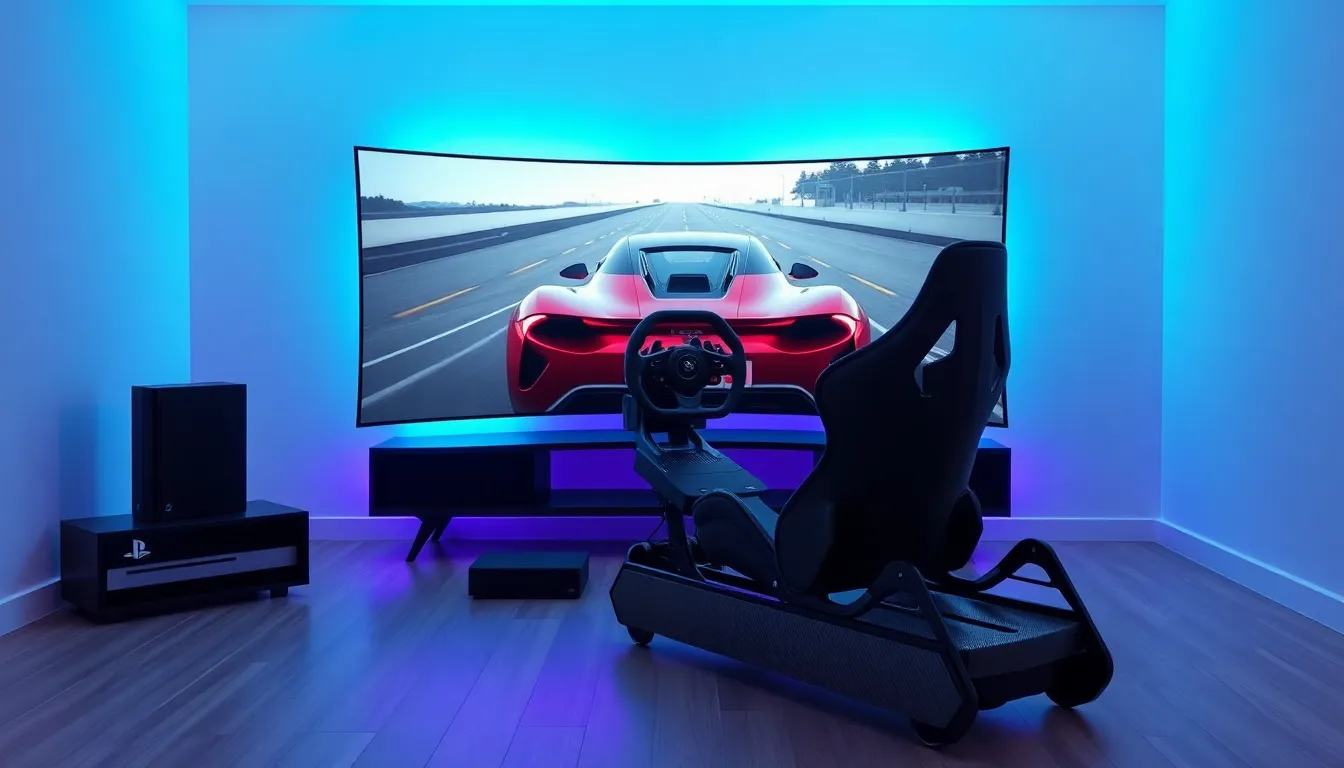
Gran Turismo changed racing video games forever. Sony’s flagship racing simulator launched in 1997 and quickly became the gold standard for virtual motorsport. The series has sold over 90 million copies worldwide, making it one of the best-selling PlayStation franchises in history. What started as creator Kazunori Yamauchi’s passion project evolved into a cultural phenomenon that bridges gaming and real-world racing. This article explores the history, features, and lasting impact of Gran Turismo on both the gaming industry and motorsport culture.
Table of Contents
ToggleKey Takeaways
- Gran Turismo revolutionized racing games when it launched in 1997 and has sold over 90 million copies worldwide.
- The series uses laser-scanning technology and real automaker data to deliver authentic driving physics and millimeter-accurate recreations of famous circuits.
- Gran Turismo 7, released in 2022, features over 450 vehicles, ray-traced graphics, and DualSense haptic feedback on PlayStation 5.
- The GT Academy program successfully transformed talented gamers into professional racing drivers who competed in events like the 24 Hours of Le Mans.
- Gran Turismo’s influence extends beyond gaming through FIA-sanctioned esports competitions and a 2023 feature film based on a real player’s journey to professional motorsport.
The Origins and Evolution of Gran Turismo
Kazunori Yamauchi founded Polyphony Digital in 1998, but his vision for Gran Turismo began years earlier. The first Gran Turismo debuted on the original PlayStation in December 1997 in Japan. Development took five years, an eternity by 1990s standards. That dedication paid off.
The original game featured 178 cars and 11 tracks. Critics praised its attention to detail and realistic handling. Players could tune suspension, gear ratios, and tire compounds. No console racing game had offered this level of depth before.
Gran Turismo 2 arrived in 1999 with nearly 650 cars. The PlayStation 2 era brought Gran Turismo 3: A-Spec in 2001, which showcased stunning graphics that pushed hardware limits. Gran Turismo 4 followed in 2004 with over 700 vehicles and the innovative Photo Mode feature.
The PlayStation 3 generation saw Gran Turismo 5 launch in 2010 after multiple delays. It introduced weather effects and a day-night cycle. Gran Turismo 6 arrived in 2013 with improved physics and the Vision Gran Turismo program, which invited real car manufacturers to design fantasy vehicles for the game.
Each Gran Turismo release pushed boundaries. Yamauchi’s team spent years capturing real car data, licensing hundreds of vehicles, and laser-scanning actual race circuits. This commitment to authenticity became the series’ trademark.
What Makes Gran Turismo Stand Out
Gran Turismo earned the subtitle “The Real Driving Simulator” for good reason. The series separates itself from arcade racers through obsessive attention to automotive accuracy.
Realistic Driving Physics and Car Collection
The physics engine in Gran Turismo simulates tire grip, weight transfer, and aerodynamics with remarkable precision. Each car handles differently based on its real-world specifications. A front-wheel-drive Honda Civic behaves nothing like a rear-wheel-drive Mazda MX-5. Players feel these differences through every corner.
Polyphony Digital works directly with automakers to capture authentic data. Engineers measure engine torque curves, suspension geometry, and brake characteristics. This collaboration produces virtual cars that mirror their physical counterparts.
The car collection in Gran Turismo spans decades of automotive history. Players can drive a 1966 Volkswagen Beetle or a modern Porsche 911 GT3 RS. The roster includes everyday commuters, vintage classics, and purpose-built race cars. This variety lets players experience automotive evolution firsthand.
Gran Turismo also features real-world circuits recreated with laser-scanning technology. The Nürburgring Nordschleife, Laguna Seca, and Suzuka Circuit appear with millimeter accuracy. Every bump, elevation change, and curb matches the actual track.
The game’s career mode teaches driving fundamentals. License tests cover braking points, racing lines, and car control techniques. Many professional racing drivers credit Gran Turismo with sparking their interest in motorsport.
Gran Turismo 7 and the Latest Features
Gran Turismo 7 launched on PlayStation 5 and PlayStation 4 in March 2022. The game represents Polyphony Digital’s most ambitious project yet. It combines the single-player depth of classic entries with modern online features.
The car list exceeds 450 vehicles at launch, with regular updates adding more. Gran Turismo 7 includes legendary manufacturers like Ferrari, Lamborghini, and McLaren alongside everyday brands. The Used Car Dealership and Legendary Dealership rotate inventory, encouraging players to check back regularly.
Graphics reach new heights on PlayStation 5. Ray-traced reflections show accurate environmental detail on car surfaces. The adaptive triggers on the DualSense controller simulate brake pressure and throttle resistance. Players feel the difference between a grippy tire and one that’s overheating.
Gran Turismo 7 revived the beloved GT Café feature. Players receive Menu Books that guide them through collecting specific car types. Completing these books unlocks rewards and teaches automotive history through character interactions.
Music Rally mode offers quick races set to licensed songs. The Scapes photo mode provides over 2,500 locations for virtual car photography. These features give Gran Turismo 7 appeal beyond pure racing.
Online multiplayer uses a Sport Mode system carried over from Gran Turismo Sport. Players earn Driver Ratings and Sportsmanship Ratings based on their performance and conduct. This system promotes clean racing and matches competitors of similar skill levels.
Gran Turismo’s Impact on Racing Games and Motorsport
Gran Turismo influenced every racing simulator released after 1997. The series proved that console players wanted realistic driving experiences. Competitors like Forza Motorsport emerged partly in response to Gran Turismo’s success.
The relationship between Gran Turismo and real motorsport goes both ways. Several professional drivers started their careers through Gran Turismo’s GT Academy program. This partnership with Nissan transformed talented gamers into actual racing drivers. Lucas Ordóñez, Jann Mardenborough, and others competed in prestigious events like the 24 Hours of Le Mans after winning GT Academy competitions.
Automobile manufacturers now view Gran Turismo as a legitimate marketing platform. Companies unveil concept cars and Vision Gran Turismo projects through the game. Young consumers often experience brands like Pagani or Koenigsegg for the first time in Gran Turismo.
The 2023 film “Gran Turismo” brought the franchise to theaters. Directed by Neill Blomkamp, the movie told Jann Mardenborough’s story of transitioning from gamer to professional racer. This film introduced Gran Turismo to audiences who had never played the games.
Esports competitions built around Gran Turismo attract thousands of participants. The FIA Gran Turismo Championships provide official recognition from motorsport’s governing body. Winners receive real trophies at FIA prize-giving ceremonies alongside Formula 1 champions.