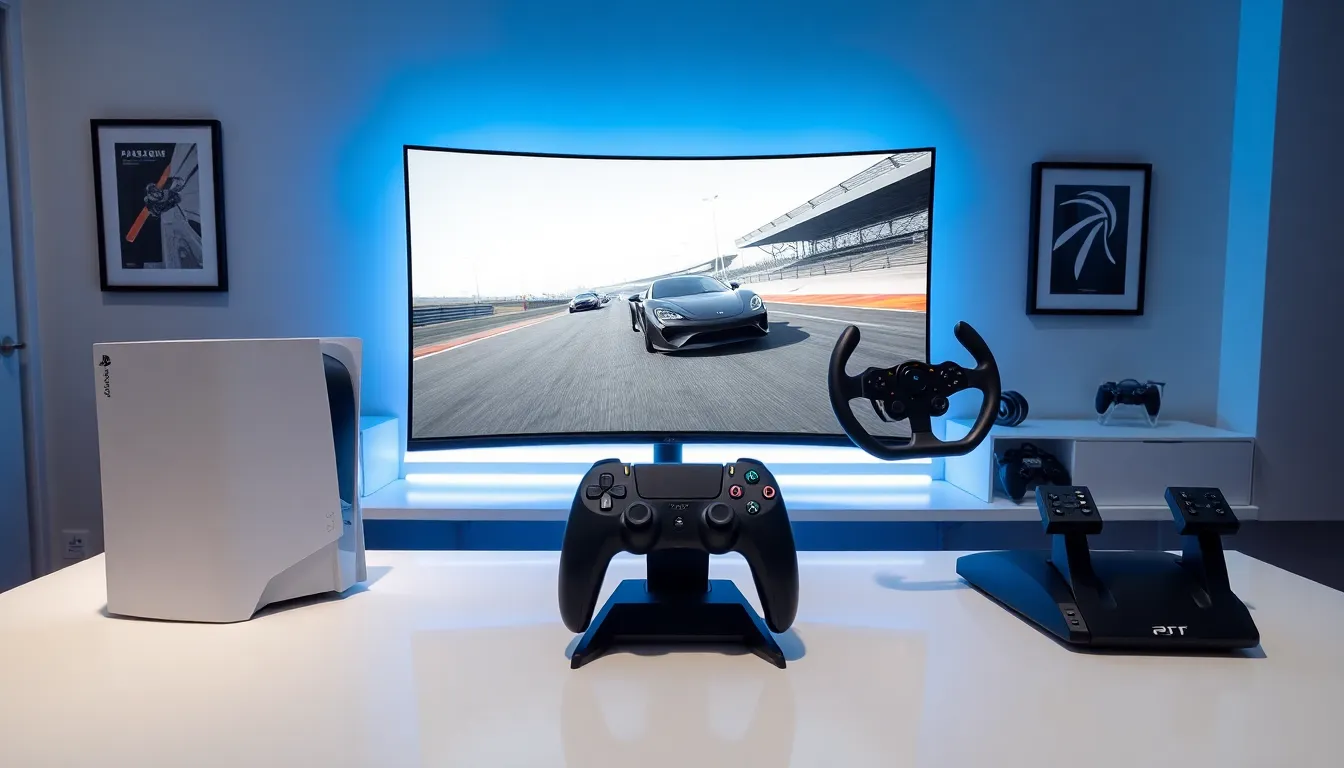

Learning how to racing games takes patience, practice, and the right approach. Many new players jump into racing games expecting instant success, only to find themselves spinning out on every corner. The good news? Racing games reward dedication. With a few fundamental skills and consistent effort, anyone can transform from a back-of-the-pack struggler into a competitive driver.
This guide breaks down the essential techniques every beginner needs to master. From understanding basic controls to building muscle memory through practice, these tips provide a clear path to improvement. Whether someone plays casual arcade racers or realistic simulators, these principles apply across the genre.
Table of Contents
ToggleKey Takeaways
- Learning how to racing games requires patience and gradual skill-building—start with assists enabled and reduce them as you improve.
- Master smooth, gradual inputs instead of treating throttle, brake, and steering like on/off switches for better car control.
- Use trail braking (braking while turning into corners) to shift weight forward and gain more grip for faster cornering.
- Memorize track layouts and racing lines by using visual overlays initially, then practice until braking points become automatic.
- Short, focused practice sessions of 30 minutes beat marathon gaming nights—quality repetition builds muscle memory faster.
- Prioritize consistency over raw speed; drivers who lap reliably will outperform faster but erratic competitors.
Understanding the Basics of Racing Game Controls
Every racing game starts with controls. Before attempting advanced techniques, players must understand what each input does and how it affects the car.
Most racing games use similar control schemes. The throttle accelerates the car. The brake slows it down. Steering moves the vehicle left or right. Simple enough, right? The challenge comes from learning how these inputs work together.
New players often make the mistake of treating controls like on/off switches. They press the throttle all the way down or slam the brakes completely. Racing games reward gradual input instead. Gentle throttle application prevents wheel spin. Smooth steering keeps the car stable.
Controller users should pay attention to trigger sensitivity. Modern controllers allow variable pressure on triggers, which translates to partial throttle or brake input. This precision matters more than many beginners realize.
For those playing racing games with a steering wheel, the learning curve steepens initially but pays off later. Wheel users gain finer control over steering angle. They can feel the car’s behavior through force feedback. This tactile information helps drivers react faster to slides or loss of grip.
Spend time in free practice modes just getting comfortable with how the car responds. Notice how different speeds affect steering response. Feel how the car behaves under braking versus acceleration. This foundation supports everything else.
Mastering Braking and Cornering Techniques
Braking separates fast drivers from slow ones. Most beginners brake too late or too little. Others brake too early and lose precious time.
The key concept here involves trail braking. This technique means continuing to brake while turning into a corner, then gradually releasing the brake as steering angle increases. Trail braking shifts weight to the front tires, giving them more grip for turning.
Here’s how to approach a typical corner in racing games:
- Brake in a straight line before the corner
- Begin turning while still lightly on the brakes
- Release the brake progressively as the car rotates
- Apply throttle smoothly as the car straightens
This sequence takes practice to execute smoothly. Racing games simulate physics, so weight transfer matters. Hard braking pitches weight forward. Sudden acceleration shifts it backward. Smooth transitions keep the car balanced and predictable.
Another common mistake involves turning too sharply. Sharp steering inputs unsettle the car and scrub speed. Instead, players should use the widest possible arc through corners. Enter wide, hit the apex at the corner’s midpoint, and exit wide again.
Practicing one corner repeatedly helps internalize these concepts. Pick a challenging turn and run it dozens of times. Focus on consistent braking points and smooth inputs. Racing games reward this kind of deliberate practice.
Choosing the Right Assists and Difficulty Settings
Racing games offer various driving assists designed to help newer players. Traction control prevents wheel spin during acceleration. Stability control catches slides before they become spins. ABS (anti-lock braking system) prevents wheel lockup under hard braking.
Beginners should start with assists enabled. There’s no shame in using training wheels. These aids let new players focus on learning tracks and racing lines without constantly spinning off the road.
But, assists do limit ultimate speed. Traction control cuts power when it detects wheel spin, which can slow acceleration out of corners. Stability control intervenes when the car begins to slide, sometimes preventing faster cornering techniques.
The smart approach involves gradually reducing assists as skills improve. Start with everything on. Once comfortable, try turning off one assist at a time. Many players find ABS the easiest to remove first, then traction control, then stability control.
Difficulty settings for AI opponents deserve attention too. Racing against easy AI teaches bad habits because they make mistakes and drive slowly. Moderate difficulty provides cleaner racing and better benchmarks for improvement.
Racing games also let players adjust car setup options. Beginners should stick with default setups initially. Car tuning adds another variable that distracts from core driving skill development. Learn to drive fast first, then experiment with setups.
Learning Track Layouts and Racing Lines
Fast lap times require track knowledge. Professional racers memorize every corner, bump, and braking point on circuits they compete on. Racing games demand similar dedication.
The racing line represents the fastest path around a track. It typically follows an outside-inside-outside pattern through corners. This line maximizes corner radius, allowing higher speeds while maintaining grip.
Many racing games include a visual racing line overlay. This feature shows the ideal path and changes color to indicate when to brake or accelerate. Use this tool early in the learning process, then disable it once the track becomes familiar.
Braking markers help with consistency. Most tracks feature distance boards (showing 100m, 50m, etc.) or visual landmarks near corners. Pick a specific point to begin braking and use it every lap. Consistency builds speed over time.
Watch replay footage after sessions. Racing games store lap data that shows exactly where time was gained or lost. Compare fast laps to slow ones. Notice where mistakes occurred. This analysis accelerates improvement dramatically.
Some players benefit from watching fast lap videos online. Seeing how quick drivers approach each corner provides a template to copy. Just remember that setup differences and skill gaps mean these lines might need adjustment.
Practicing Consistently to Build Muscle Memory
Racing games reward repetition. The physical movements required, steering inputs, trigger pressure, timing, become automatic through practice. This automation frees mental capacity for strategic thinking during races.
Short, focused practice sessions work better than marathon gaming nights. Thirty minutes of concentrated effort beats three hours of distracted play. Fatigue leads to sloppy habits that then require unlearning.
Structure practice around specific goals. One session might focus on a single corner that causes problems. Another might work on consistent lap times without chasing ultimate speed. Clear objectives produce faster improvement than aimless lapping.
Time trial modes offer the best environment for skill building. No AI interference means pure focus on driving. Leaderboards provide benchmarks showing how much improvement remains possible.
Racing games test patience. Improvement comes in waves, not straight lines. Players hit plateaus where progress stalls. Breaking through requires identifying specific weaknesses and addressing them directly.
Recording gameplay helps identify blind spots. Watching footage reveals mistakes invisible in the moment. That slight steering correction causing understeer. The early throttle application spinning the rear tires. Video review exposes these issues clearly.
Consistency matters more than speed initially. A driver who can lap within half a second of their best every time will beat someone faster but erratic. Build consistency first, then push the limits.