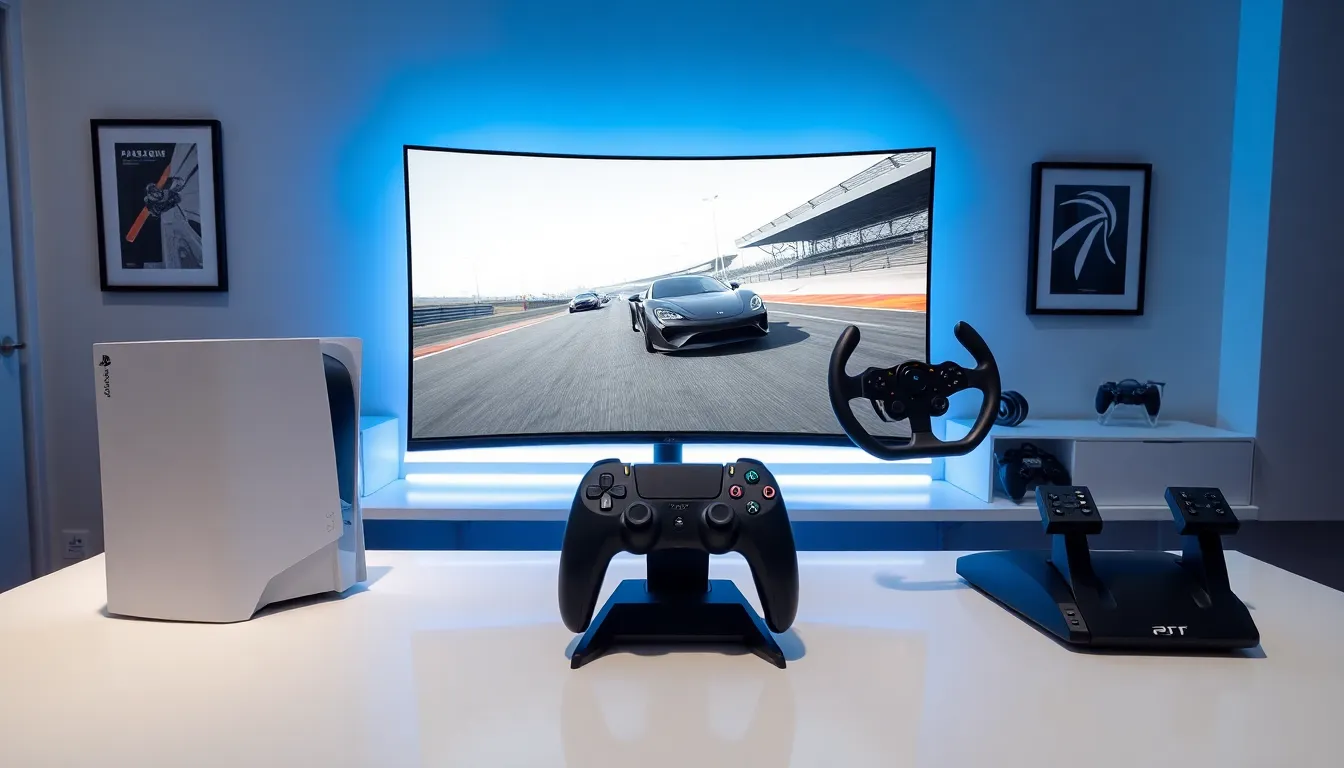

Racing games have captivated players for decades. From pixelated speedways to photorealistic circuits, the genre continues to attract millions of fans worldwide. These games deliver pure adrenaline, competition, and the thrill of speed without leaving your couch.
Whether players prefer drifting through city streets or mastering professional tracks, racing games offer something for everyone. This guide covers everything from genre basics to expert tips. Readers will learn what makes these games addictive, the different types available, and how to choose the right one.
Table of Contents
ToggleKey Takeaways
- Racing games appeal to millions by offering instant adrenaline, competitive gameplay, and the thrill of driving dream cars on famous tracks.
- Arcade racers prioritize fun and accessibility, while simulation racing games deliver realistic physics, tire wear, and strategic depth.
- When choosing a racing game, prioritize car variety, track diversity, physics style, game modes, and smooth frame rate performance.
- Beginners should start with driving assists enabled, learn the optimal racing line, and practice brake points to improve quickly.
- Replays and car tuning are powerful tools—analyze your mistakes and adjust vehicle settings to shave seconds off your lap times.
What Makes Racing Games So Popular
Racing games tap into a universal desire: the need for speed. Players feel an immediate rush when they floor the virtual gas pedal and watch the scenery blur past. This instant gratification keeps them coming back.
The competitive aspect plays a huge role too. Racing games pit players against AI opponents, online rivals, or their own best times. Every race becomes a chance to prove skill and improve. Leaderboards add another layer of motivation, pushing players to shave milliseconds off their lap times.
Accessibility also contributes to the genre’s success. Most racing games have simple controls, accelerate, brake, and steer. A beginner can pick up a controller and start having fun within minutes. But mastering advanced techniques like drafting, optimal racing lines, and brake timing takes real dedication.
The visual appeal can’t be ignored either. Modern racing games showcase stunning graphics with detailed car models, dynamic weather, and realistic lighting. Watching a sunset reflect off a polished hood while speeding through mountain roads creates a memorable experience.
Finally, racing games provide escapism. Not everyone can afford a sports car or has access to professional tracks. These games let players drive vehicles worth hundreds of thousands of dollars on famous circuits around the world.
Types of Racing Games
The racing games genre spans a wide spectrum. Understanding the different categories helps players find titles that match their preferences and play style.
Arcade Racers vs. Simulation Games
Arcade racers prioritize fun over realism. They feature forgiving physics, power-ups, and exaggerated drifting mechanics. Games like Mario Kart and Need for Speed fall into this category. Players can crash into walls, bounce off opponents, and still win races. These titles work great for casual sessions and multiplayer parties.
Simulation racing games take the opposite approach. They aim to replicate real-world driving as accurately as possible. Gran Turismo and Forza Motorsport exemplify this style. Tire wear matters. Fuel management affects strategy. One mistake can end a race. Simulation fans often use steering wheels and pedal setups for maximum immersion.
Some racing games blend both approaches. Forza Horizon, for example, combines simulation-quality car handling with open-world exploration and accessible gameplay. This hybrid style appeals to players who want realism without the steep learning curve.
Beyond the arcade-simulation divide, other subgenres exist. Kart racers feature characters and items over pure driving skill. Off-road racers focus on dirt tracks, rally stages, and rugged terrain. Combat racers add weapons and destruction to the mix. Open-world racers let players explore cities and countryside while completing events.
Key Features to Look for in Racing Games
Choosing the right racing game depends on several factors. Here’s what players should consider before making a purchase.
Car Selection: A good racing game offers variety. Look for titles with dozens or hundreds of vehicles across different classes, sports cars, supercars, classic muscle, and rally vehicles. Customization options add extra value.
Track Diversity: The best racing games include multiple environments. Real-world circuits like Spa-Francorchamps or fictional urban courses keep gameplay fresh. Dynamic weather and day-night cycles add replay value.
Physics Engine: How a car handles determines the overall experience. Some players want arcade-style physics where drifting feels effortless. Others prefer realistic tire grip and suspension modeling. Testing demos helps here.
Game Modes: Single-player campaigns, online multiplayer, split-screen options, and time trials all matter. Career modes with progression systems can provide hundreds of hours of content. Online racing offers endless competition.
Graphics and Performance: Frame rate stability matters more than visual fidelity in racing games. A smooth 60fps experience beats gorgeous graphics that stutter during crucial moments. Check performance reviews before buying.
Controller Support: Racing games work with standard controllers, but wheel and pedal setups enhance immersion. Confirm that a game supports preferred hardware.
Tips for Getting Started With Racing Games
New players can feel overwhelmed by the speed and competition in racing games. These tips help beginners improve quickly.
Start with assists enabled. Most racing games include braking assistance, steering help, and traction control. These features prevent frustration while players learn tracks and controls. Gradually disable assists as skills improve.
Learn the racing line. The fastest path around a track follows a specific pattern, wide entry, apex touch, wide exit. Racing games often display this line on the track surface. Following it improves lap times immediately.
Practice brake points. Knowing when to slow down matters as much as knowing when to accelerate. Look for visual markers like signs, curbs, or shadows to create consistent braking habits.
Study track layouts before racing. Time trial modes let players learn circuits without opponents. Memorizing corners, elevation changes, and hazards provides a significant advantage in competition.
Watch replays. Most racing games record races for later viewing. Analyzing mistakes, missed apexes, late braking, poor exits, reveals opportunities for improvement.
Don’t neglect car tuning. Adjusting suspension, gear ratios, and downforce can transform a difficult vehicle into a winning machine. Start with community-shared setups before creating custom configurations.